“central china” search results (2000)

Main producing areas and characteristics of Coffee in the World
Coffee production zones (commonly known as coffee belts) range from 25 degrees north latitude to 30 degrees south latitude, covering many countries in Central, West Africa, the Middle East and South Asia, the Pacific, Latin America and the Caribbean. The reason why coffee cultivation is concentrated in this area is mainly due to the limitation of temperature. Because coffee trees are vulnerable to frost, neither north nor south latitude is suitable, especially in the tropics.
2015-04-24 The world coffee major producing areas characteristics production zone known as in
The main producing areas and characteristics of Coffee in the World
Coffee production zones (commonly known as coffee belts) range from 25 degrees north latitude to 30 degrees south latitude, covering many countries in Central, West Africa, the Middle East and South Asia, the Pacific, Latin America and the Caribbean. The reason why coffee cultivation is concentrated in this area is mainly due to the limitation of temperature. Because coffee trees are vulnerable to frost, neither north nor south latitude is suitable, especially in the tropics.
2014-11-26 Coffee knowledge coffee common sense coffee producing areas coffee characteristics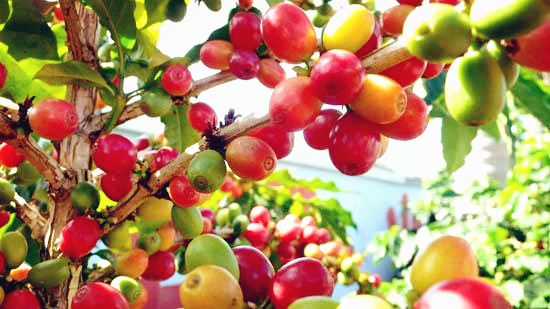
Brief introduction of Coffee producing countries-- Honduran Coffee History washing bourbon
Coffee beans Central American region Honduras Honduras, the full name of the Republic of Honduras (Spanish: Repblica de Honduras), is a mountainous country in Central and North America, bordering Guatemala, El Salvador and Nicaragua, located between the Pacific Ocean and the Caribbean, with a coastline. Most of the country's citizens are of mixed descent, so most of them believe in Catholicism
2016-03-30 Coffee country of production profile Honduras History washing bourbon Coffee beans Central America
History of introduction and expansion of Coffee in early China (5)
1. From the first peak period of the development of China's coffee industry (1952-1961) to the late 1940s, according to recorded figures, there are 2173.33 hectares of rubber plantations in Hainan Island, with a total of 867600 rubber trees, with an annual output of 199,000 tons of dry rubber, and more than 300,000 coffee plants. the annual output of coffee beans is 1 ton. According to a survey in the early 1950s, there was a large amount of coffee left in Fushan area of Chengmai County, with a total of 70,000.
2015-04-28 Early China coffee introduction expansion
Basic knowledge of coffee in main producing areas and characteristics of coffee
Coffee production zones (commonly known as coffee belts) range from 25 degrees north latitude to 30 degrees south latitude, covering many countries in Central, West Africa, the Middle East and South Asia, the Pacific, Latin America and the Caribbean. The reason why coffee cultivation is concentrated in this area is mainly due to the limitation of temperature. Because coffee trees are vulnerable to frost, neither north nor south latitude is suitable, especially in the tropics.
2015-07-28 Coffee major producing areas characteristics basics common sense coffee production zone called
Introduction of Guatemalan boutique coffee bean brands with very strong flavor
There is a wide gap between the rich and the poor in Guatemala, with the top 10% of the population accounting for 42.4% of the country's wealth, while the bottom 10% of the population accounts for only 1.3% of the country's wealth, with a Gini coefficient of 0.55. Starting from January 1, 2010, the minimum wage for at-risk workers was raised to 56 quetzales ($6.71) per person per day, plus a bonus of 250 quetzals ($29.97) per month. [1] Medical 2009, Guatemala
2016-08-17 Taste very full-bodied Guatemala boutique coffee beans brands types introduction
Coffee beans Central American region Honduras Honduras San Juan Theodor No. 1 water wash bourbon mellow
Speaking of Honduran coffee, many people may feel very strange. Is there coffee in Honduras? In my impression, this is one of the most restless countries in China and the United States, and the current political situation is still very unstable. The only thing that can be connected with it is the world-famous diving resort of Honduras Blue Cave. Coffee? Will there be coffee production in such a chaotic country? But, indeed, Hong
2016-04-01 Coffee beans Central America region Honduras San Hu Theodore No.1
Fine Coffee the main producing areas and characteristics of coffee in the world
Coffee production zones (commonly known as coffee belts) range from 25 degrees north latitude to 30 degrees south latitude, covering many countries in Central, West Africa, the Middle East and South Asia, the Pacific, Latin America and the Caribbean. The reason why coffee cultivation is concentrated in this area is mainly due to the limitation of temperature. Because coffee trees are vulnerable to frost, neither north nor south latitude is suitable, especially in the tropics.
2015-03-04 Boutique Coffee World Major producing area characteristic production Zone called
History and present situation of Coffee cultivation in China
History of Coffee cultivation in the World Coffee originated in the tropics of northern and central Africa. It has been cultivated for more than 2000 years, and the Arabs began to plant it in 525 BC. At first, coffee beans were only used for chewing. In 890 AD, Arab merchants brought coffee to Yemen and made it into a drink for the first time. By the 13th century, Arabs had become in the habit of stir-frying coffee, but to
2015-10-07 China Coffee cultivation History present situation World
History of Colombian Coffee beans Green Gold China Coffee Trading Network
History traces back to Colombian coffee brand Colombian coffee brand (9) the history of coffee cultivation in Colombia can be traced back to the Spanish colonial era in the 16th century, and there are many theories about the history of coffee in Colombia: one: it is said to come from the island of the Caribbean and by sea through El Salvador in Central America. Second: in 1808, a priest came from French Ann.
2016-04-20 Colombia coffee beans historical origin green gold China coffee trading network
The History and present situation of Coffee cultivation in China
History of Coffee cultivation in the World Coffee originated in the tropics of northern and central Africa. It has been cultivated for more than 2000 years, and the Arabs began to plant it in 525 BC. At first, coffee beans were only used for chewing. In 890 AD, Arab merchants brought coffee to Yemen and made it into a drink for the first time. By the 13th century, Arabs had become in the habit of stir-frying coffee, but to
2015-02-16 Boutique coffee planting China cultivation history status quo
The Guangzhou Division of the World siphon Pot Competition came to a successful end.
From August 16 to 17, sponsored by the Pu'er Municipal Government of Yunnan Province and co-sponsored by the Coffee Salon and Yiwai Coffee, the Pu'er Coffee and the first Chinese Pu'er Coffee Cup World siphon Pot Competition [Guangzhou Station] ended perfectly. The top three contestants in Guangzhou, with the top three in North China, Northeast China, East China, Central China, Southwest and Northwest.
2014-04-27 World siphon contest Guangzhou Division perfect ending August 16Mutual 17
High-quality coffee produced by backward countries gifts from baristas in Honduras and China
Although it is now a backward and chaotic country, this small Central American country is also a region of Mayan civilization, with many relics of Mayan civilization and beautiful tropical seaside scenery. If it were not for such a turbulent situation, it will certainly become a tourist destination. Had it not been for such a turbulent situation, the coffee here would have been better. Honduran coffee comes from Sal.
2016-04-16 Backward national production quality coffee Honduras China transactions gifts though
The Spread of Coffee/ Coffee spread
The spread of coffee to Asia The Arabians could not spread coffee in Asia but the Dutch did! In the process of Dutch colonization, they grew coffee in Maraba, Indiaand brought coffee to Batavia in Java, Indonesia in 1699. The Dutch colonie
2014-05-27 Coffee Culture Coffee spread
Chinese coffee has ushered in a recovery period with the country's reform and opening up.
From December 18 to 22, 1978, the third plenary session of Communist Party of China's 11th Central Committee was held in Beijing. The main achievements of this conference are: re-establishing the party's Marxist ideological line. The plenum resolutely criticized the two general erroneous policies, spoke highly of the discussion on the standard of truth, and determined to emancipate the mind, use the brain, seek truth from facts,
2015-02-07 China coffee with the country reform and opening up ushered in recovery period 1978
China Coffee Information Yunnan Coffee via Chongqing New Europe Special Train to Europe
Chongqing Morning Post reporter Cao Jiazhi yesterday at 10:00, the Yuxin European coffee train full of coffee beans, roasted fried beans, and instant powder from the back valley of Yunnan set out from the railway central station of Tuanjie Village. 14 days later, this batch of coffee will appear in Duisburg, Germany. This also marks that Chongqing will become an important transit station for global coffee beans. In the next three years, there will be 1 million tons of coffee from Yunnan and Southeast Asia.
2015-07-18 China Coffee Information Yunnan New Europe Special Train sent to Europe Chongqing Morning Post Records
Costa Rican coffee flavor Central and South American coffee characteristics Tara Pearl Diamond Villa washing SHB card
Costa Rican coffee plants were imported from Cuba in 1779 and exported for the first time in 1820. There are now about 32000 coffee farmers, with an average of less than 10000 yuan per farmer. Costa Rica has a population of 410 million (2006), an active coffee planting area of 82500 square meters, an annual output of 1.7 million bags (60kgs per bag), and an annual consumption of 38 million bags in China.
2016-04-15 Costa Rica Coffee Flavor Central and South America characteristics Tara Pearl Diamond Stone Mountain Zhuang
Costa Rican coffee flavor Central and South American coffee characteristics Tara Pearl Diamond Villa washing SHB card
Costa Rican coffee plants were imported from Cuba in 1779 and exported for the first time in 1820. There are now about 32000 coffee farmers, with an average of less than 10000 yuan per farmer. Costa Rica has a population of 410 million (2006), an active coffee planting area of 82500 square meters, an annual output of 1.7 million bags (60kgs per bag), and an annual consumption of 38 million bags in China.
2016-04-15 Costa Rica Coffee Flavor Central and South America characteristics Tara Pearl Diamond Stone Mountain Zhuang
Different kinds of coffee beans and different taste of coffee beans
Coffee is a product of the tropics. You may not believe that the best coffee producer in the world is in Yunnan, China.
2016-04-30 Coffee beans category and taste difference flavor variety
Costa Rica of 53 Coffee Origin in the World
Costa Rica, with its fertile volcanic soil and good drainage, is the first country in Central America to grow coffee and bananas for commercial value. Coffee and bananas are the country's main exports. Coffee was introduced into Costa Rica from Cuba in 1729 and today its coffee industry is one of the most well-organized industries in the world with a yield of 1700 kg per hectare. Goss.
2015-11-03 Global 53 coffee origin Costa Rica volcano earth